Introducing The Nest Metaphor
For years, I’ve been developing a framework I now call The Nest Metaphor. It’s lived in my notes, my sessions, my consult conversations, and my own inner process for a long time. Bringing it into public view feels a bit like setting something you’ve built carefully in your hands down on the table and saying, “This matters to me. Here it is…”
Before I say anything else: the image of the nest is not new. Across generations, people have used nests to understand protection, belonging, home, and what it takes for life to thrive. Many cultures have long held nature-based metaphors as teaching tools, ways of passing down wisdom about attachment, interdependence, danger, refuge, and repair. I want to name that lineage with respect and gratitude.
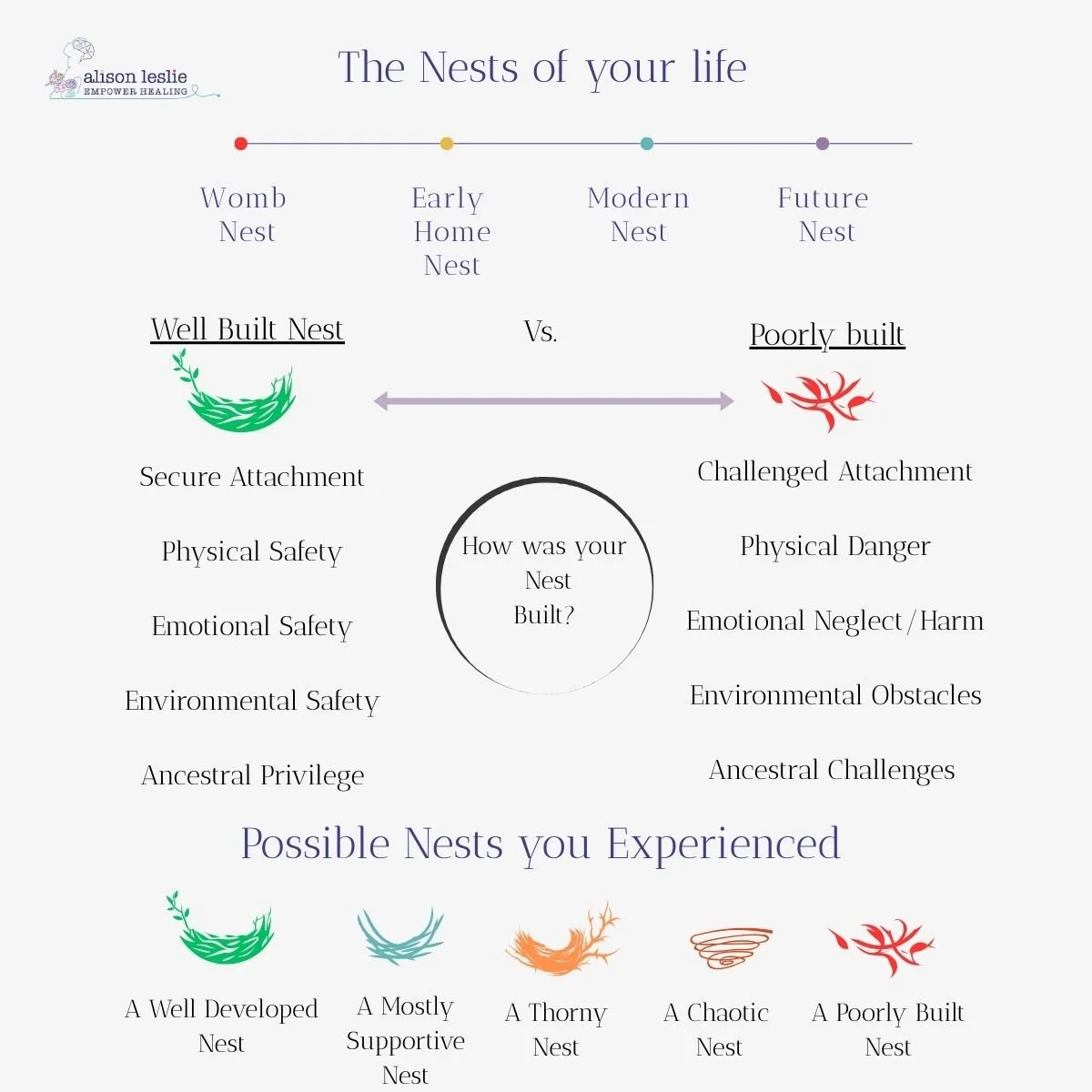
What I created is my own clinical version of this metaphor, a structured, trauma-informed framework designed to support healing in a practical way. The Nest Metaphor (as I teach and use it) helps clinicians and clients explore history with compassion instead of judgment, while also tracking what the body has carried across time.
Why I built it
Over the past 20 years, I’ve worked with children and adults who learned to blame themselves for what happened to them—while minimizing the very real conditions that shaped their nervous systems. I’ve watched people develop brilliant protective strategies to survive, and then get labeled “too much,” “not enough,” “dramatic,” “avoidant,” or “dysregulated” by a world that didn’t understand the context.
I’ve also witnessed how systems can fail people—how oppression and chronic stress load the body with threat when someone is repeatedly excluded, stereotyped, surveilled, or denied resources based on the color of their skin, who they love, immigration status, or the environments they’re forced to navigate. When we don’t name that, we risk making the person the problem—rather than recognizing what happened around them.
What it offers in the therapy room
A nest is a simple image, but it changes the questions.
Instead of “What’s wrong with me?” we can gently explore both the care and challenge, noticing with curiosity:
🌿 What did my early nest provide, or not provide, around protection, attunement, and support?
🌿 What did my nervous system learn about safety, connection, and survival?
🌿 What did family, culture, community, and ancestors pass down, both burdens and strengths?
🌿 What kind of nest am I living in now, and what would a softer future nest look like?
Because so often, the work isn’t just understanding the story the mind tells, it’s also meeting the story of the body: the tension, the collapse, the hypervigilance, the numbness, the holding.
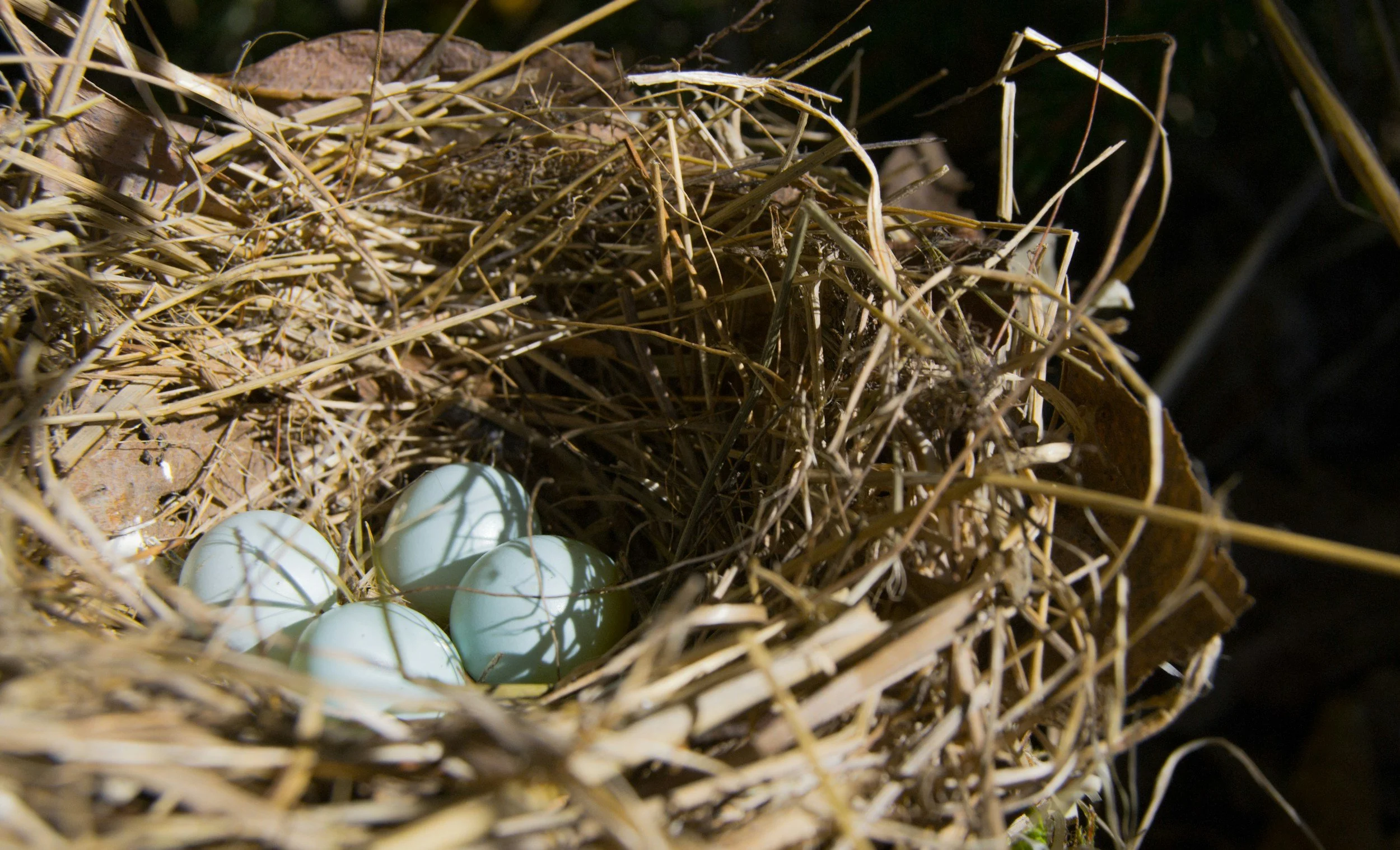
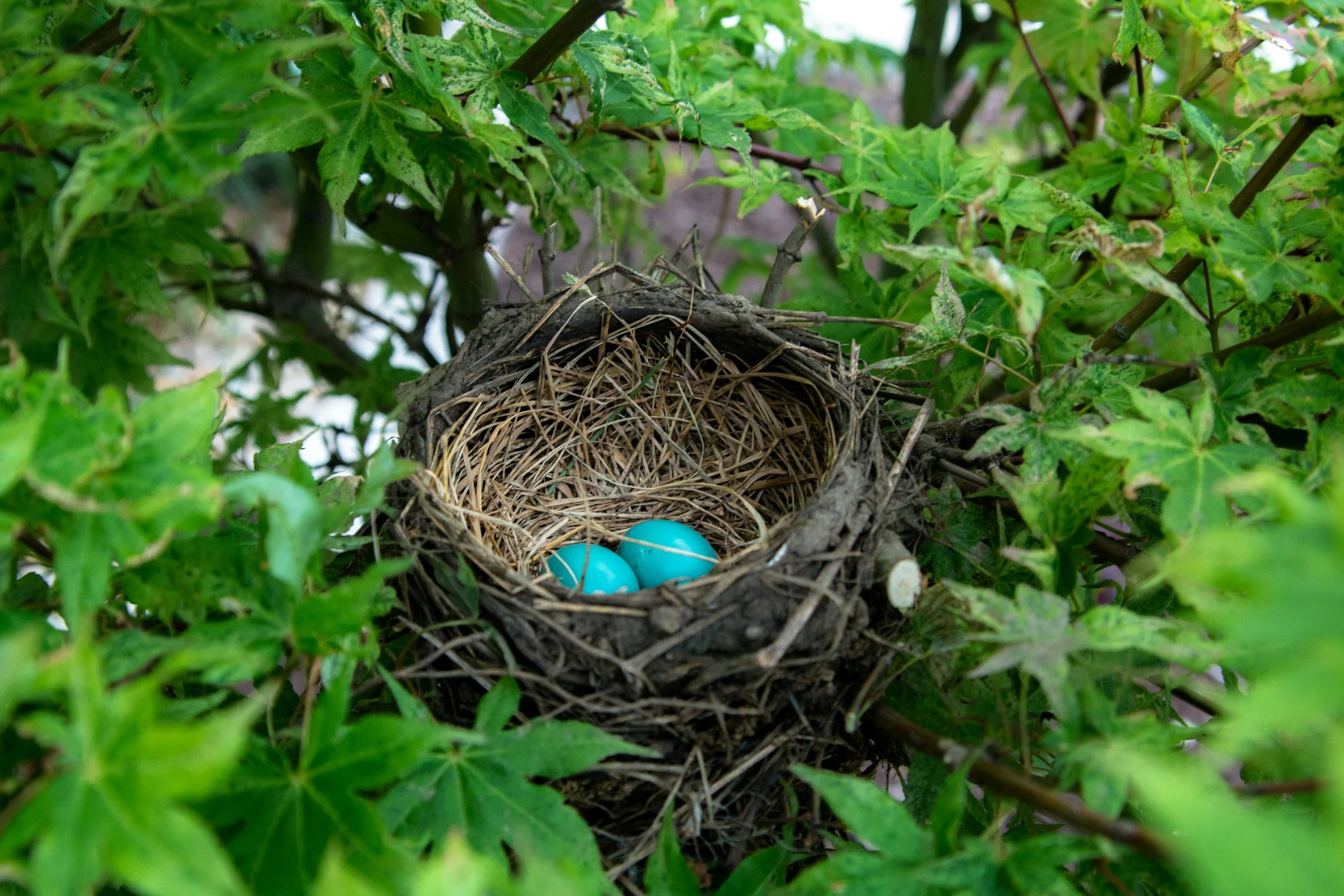
Take a moment and notice what shows up differently for you as you look at each of these nests. What happens in your body, your mind, and your heart?
How it integrates with EMDR, Somatic Therapy, and other models
The Nest Metaphor can be used alongside EMDR, Somatic Therapy, and many other approaches because it functions as a map:
It supports history-taking and case conceptualization without flattening a person into symptoms.
It strengthens resourcing and preparation, helping clients build nervous-system safety before deeper trauma processing.
It offers language for adaptations as intelligence, rather than pathology.
It helps clients anchor into the present (“modern nest”) while making sense of the past, and imagining a future that feels more livable.
Beyond “I’m fine” and into flourishing
There’s another layer that matters deeply to me: healing can’t only mean “symptoms are less intense.” Being okay is not the same as flourishing.
That’s why I weave in the Capabilities Approach, a clinical compass and philosophical framework that asks: What are humans genuinely entitled to have access to in order to flourish? Not as a feel-good concept, but as a grounded guide for repair and treatment planning. It helps us name what was missing (and what should never have been missing), and supports work that expands access to safety, agency, connection, play, rest, voice, and belonging.
A gentle way to begin
If you’d like a starting point, I’m sharing a worksheet that helps explore the “nests” someone has lived inside, what supported them, what threatened them, and what helped them survive. It can be used for reflection, therapy, or consultation.
I am excited to announce my first 3-hour training for EMDR clinicians specific to the Nest Metaphor. Learn more and register here: The Nest Metaphor (just scroll down to the middle of the page).
If this resonates, reply and tell me what it brings up for you. And if you’d like the first worksheet in this series, reply with NEST, and I’ll send it along.
Thank you for being here as I share something that’s been close to my heart for a long time. Putting it out into the world feels vulnerable, and also deeply aligned. If it resonates, I’d love to hear what it brings up for you, and I hope you’ll continue to stick around as we dig deeper into healing with compassion and curiosity.
With care and peace,
Alison