Wait, the body doesn’t keep the score?
Throughout my years as a clinical therapist, I have heard many versions of the phrase, “the body keeps the score.” This idea was popularized years ago by Bessel Van Der Kolk, who literally wrote the bestselling book with this title (2015). And for many of us in the trauma field, the phrase has offered language for something we can see and feel in the therapy room: trauma is not just a story someone tells. It shows up in a multitude of ways, through breath, posture, muscle tone, startle response, dissociation, shutdown, bracing, sleep, digestion, and the ability to feel safe in connection.
So when I first started hearing researchers ask whether the body actually “keeps the score,” I had a little internal pause.
Wait, what?
A few years ago, I read Lisa Feldman Barrett’s How Emotions Are Made, and one idea stayed with me, as a simple yet profound statement:
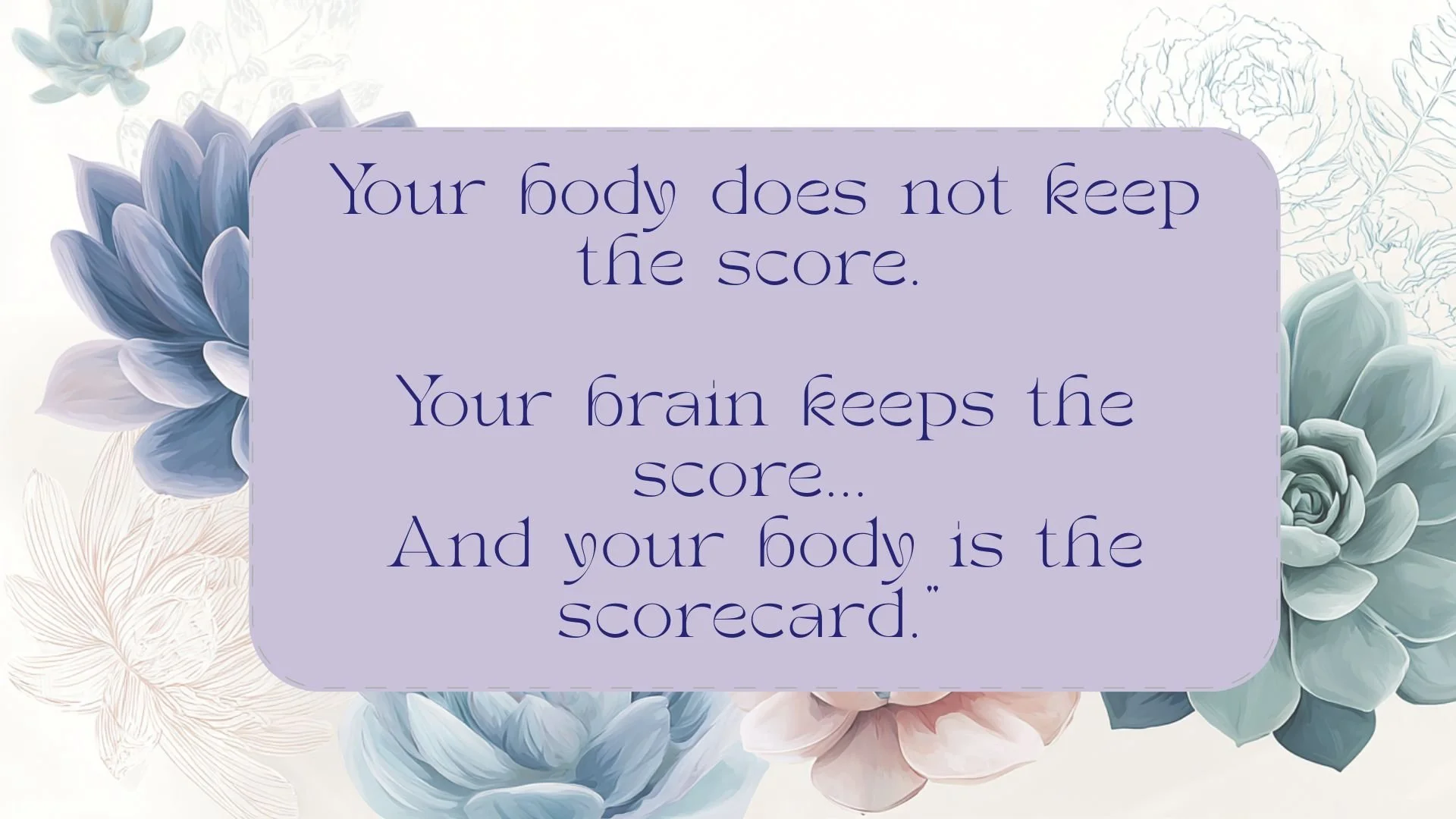
(Image reads “Your body does not keep the score. Your brain keeps the score … and your body is the scorecard.”)
It made me hungry to learn more about the brain, how it communicates with the body, and what all of this really means for trauma healing.
Recently, I read an article called The Body Does Not Keep the Score, which helped put language to something I have been observing in the office for years. The authors suggest that trauma may be less about the body storing injury and more about the brain continuing to predict danger. When those predictions become rigid, the body responds as if the past is still happening.
To me, this does not diminish the body at all; it helps put things in perspective and makes more sense. Instead of thinking of the body as a storage unit for trauma, I find it more helpful to think of it as part of a living, responsive brain-body loop. The brain predicts based on past experience, and the body responds to those predictions in the here and now.
This is exactly what I have witnessed in my office and also why somatic therapy, EMDR, and the human-animal bond helps my clients change the loop.
All of these approaches start in the same place most good therapy starts: relationship and safety.
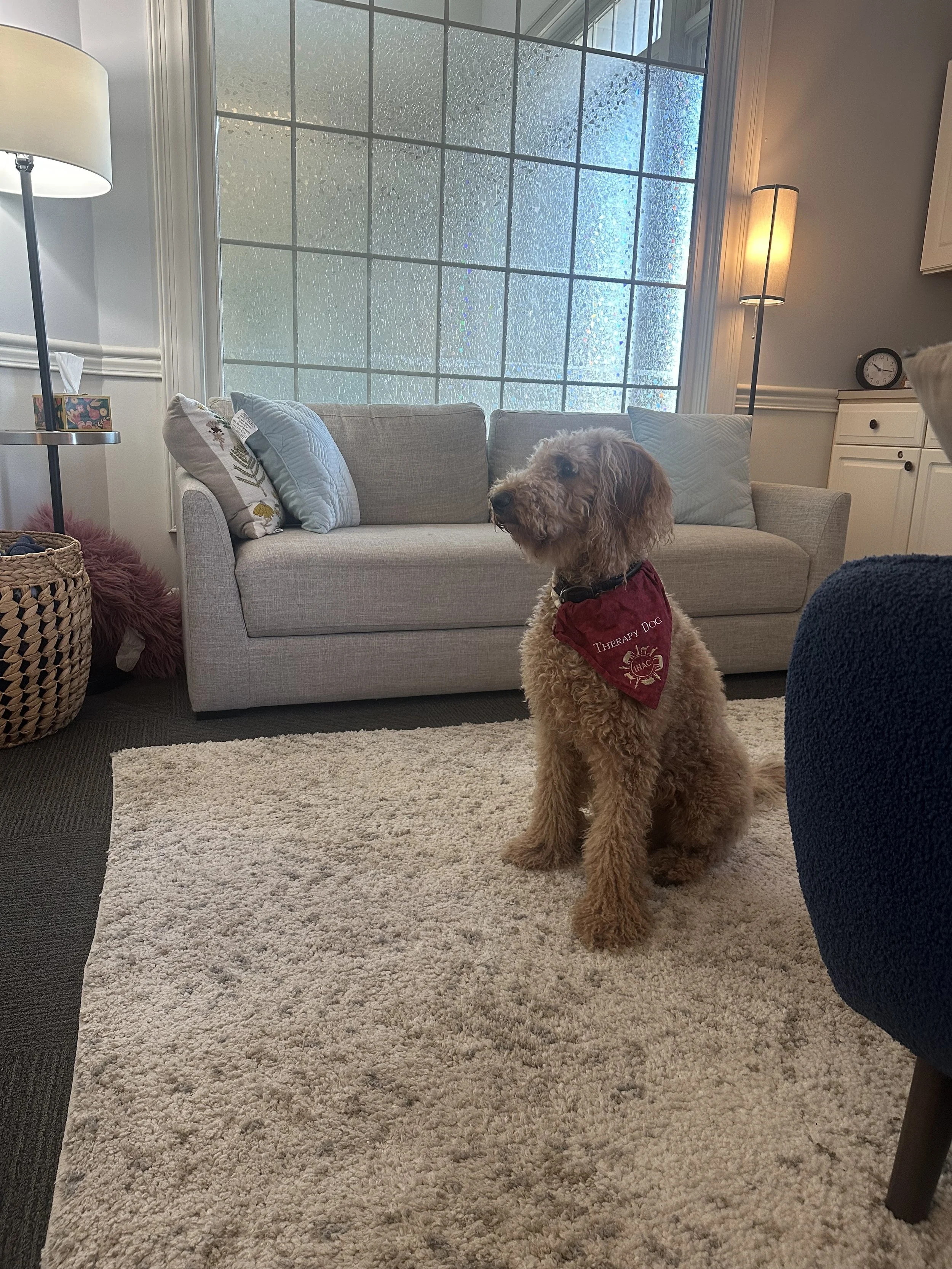
Week after week, I can often see the brain and body beginning to communicate something new. With every excited greeting of Harry at the door or the slower invitations to settle on the couch with curiosity about whether a cup of tea, a blanket, or a shuffle of the pillows would be supportive something new is emerging
That maybe, just maybe, this place and these living beings are safe to be vulnerable with, to orient towards, and hope is possible
And when prediction begins to change, the body often follows; the shoulders soften, the breath changes, the eyes orient in new ways, and
the body armor does not have to work quite so hard.
When the nervous system has sufficient embodied evidence of safety, the brain can begin to make a new prediction. And when the brain begins to predict safety with more confidence, the body gets a chance to experience something new.
This, to me, is so much of what therapy is about.
And in the strangest, most beautiful way, I realize this is what I have been supporting since the very first day my first therapy dog, Marley, greeted a child who had been abused and neglected by their family. In that moment, before there were words or insight or a treatment plan, there was a new experience of connection. A new possibility. A tiny opening for the brain and body to wonder, maybe not every relationship is dangerous.
It can feel almost too simple to say, but I think it is also deeply true: every interaction with another living being has the potential to reinforce an old prediction or create enough safety for a new one to emerge.
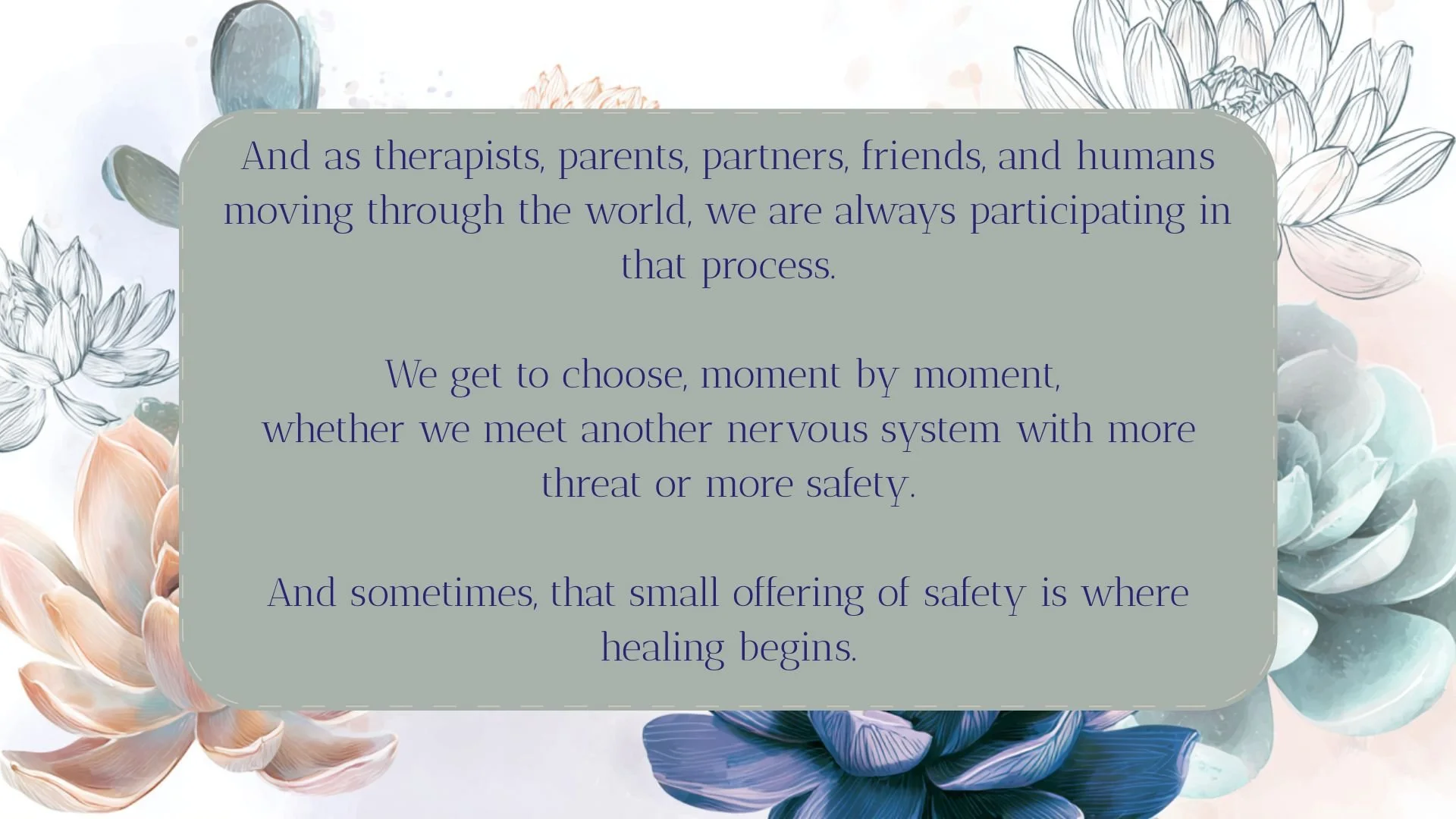
(text reads “And as therapists, parents, partners, friends, and humans moving through the world, we are always participating in that process. We get to choose, moment by moment, whether we meet another nervous system with more threat or more safety. And sometimes, that small offering of safety is where healing begins.”)
With Care and Peace,
Alison
**A small note: I have a few new freebies on my website, including a 3-part series on the Science of Safety and The Human-Animal Bond, along with other new offerings.